
Sustainable Gravel Garden Design, Stansted Essex
A low-maintenance gravel garden designed for year-round structure and texture
This sustainable gravel garden design project in Stansted, Essex was inspired by the pioneering work of Beth Chatto, whose iconic Essex gravel garden demonstrated how beautiful planting can thrive naturally in dry conditions without the need for excessive irrigation.
Her philosophy of working with the existing conditions of a site formed the starting point for this design, helping shape a garden that feels both environmentally conscious and deeply connected to its surroundings.
Designed for a sunny, free-draining site, the garden focuses on drought-tolerant planting, texture and seasonal movement to create a relaxed and immersive outdoor space that remains resilient throughout the year.

The Brief
The clients wanted to replace the existing lawn with a gravel garden inspired by the naturalistic planting style of Beth Chatto.
A key aim of the project was to create a garden that felt softer, more relaxed and easier to maintain while still providing colour, structure and interest throughout the seasons.
The garden also needed to cope well with the naturally hot, dry conditions of the site without relying heavily on irrigation or ongoing maintenance.
Rather than forcing unsuitable planting into difficult conditions, the design focused on embracing the characteristics of the site and creating a garden that would thrive naturally over time.

The Design
This garden was designed to work with the conditions rather than against them.
The existing soil was naturally free draining and relatively poor, which made it an ideal foundation for a gravel garden. By incorporating grit and soil conditioner during the preparation stage, the planting was given the support needed to establish successfully while still maintaining the open drainage conditions required for drought-tolerant planting.
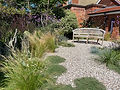
The layout allows planting to flow naturally through the space, creating a relaxed and immersive atmosphere while still maintaining an underlying structure and rhythm throughout the garden.
Gravel mulch plays an important role within the design, helping suppress weeds, retain moisture within the soil and visually unify the planting areas.
Although gravel gardens are often associated with hot Mediterranean-style planting, the underlying principle is much simpler: choosing plants that genuinely suit the conditions they are growing in.
Right plant, right place.
When those conditions are aligned, the garden becomes far easier to live with. It settles naturally over time, requiring very little intervention while continuing to develop movement, texture and seasonal interest as the planting matures.
Planting
The planting scheme focuses on drought-tolerant perennials, ornamental grasses and structural planting selected specifically for their ability to thrive within the dry, sunny conditions of the site.
Layered planting combinations help create softness, movement and seasonal variation throughout the garden while supporting pollinators and biodiversity.
Grasses weave naturally through the perennial planting, helping create a looser and more naturalistic feel that changes beautifully through the seasons.
Once established, the planting requires very little ongoing maintenance, allowing the garden to remain resilient, sustainable and visually rich throughout the year.


The Outcome
The finished garden demonstrates how thoughtful, sustainable planting can create a landscape that feels both beautiful and deeply connected to its environment.
By working with the natural conditions of the site and embracing a more naturalistic approach to planting, the garden now feels relaxed, immersive and full of life throughout the seasons.
The result is a low-maintenance gravel garden that continues to evolve naturally over time while remaining practical, resilient and environmentally conscious.


“Gravel gardens are a wonderful way to create planting that is both resilient and beautiful. By choosing plants suited to dry conditions, the garden becomes easier to care for while still offering colour, movement and seasonal interest.”
Zoe Kilbride, Garden Designer

